
Digipin promises to revolutionise location-based services in India with safeguards.

In 2025 alone, at least 50 suicides linked to online gambling losses have been reported across India. According to FIRs, the victims were addicted to betting, largely driven by cricket, rummy and poker.

'The only solution is for the government to allow us to charge a low controlled MDR of 25 bps on UPI P2M transactions only for merchants with more than a Rs 40 lakh turnover.'

At a time when the role of corporate boards is once again under the scanner, independent directors on the Paytm Payments Bank board have indicated that red flags were raised over regulatory issues but they may have been late in doing so. "As independent directors, we asked questions and monitored responses to the Reserve Bank of India (RBI). Many changes were made on compliances. "Obviously, in retrospect, it was not found to be enough," said one of the independent directors on the condition of anonymity.

'Employers increasingly want candidates who can take AI pilots from proof-of-concept to production-ready systems.' 'That requires governance, monitoring, and ROI measurement -- skills that go beyond coding and into business impact.'

The Centre on Sunday said there are no plans to levy charges for making payments through Unified Payments Interface (UPI) while saying the service is a "digital public good with immense convenience". The ministry of finance said the concerns of service providers for cost recovery have to be met through other means. "UPI is a digital public good with immense convenience for the public & productivity gains for the economy.

A day after news emerged that Foxconn Technology Group was "forced" by Beijing to send back its Chinese engineers and technicians from its Tamil Nadu plant, sources indicate that the global electronics giant has already drawn up an alternative plan to rescue its India iPhone 17 production by bringing in experts from mainly Taiwan and the US.

SEBI's blockbuster reforms are rewriting the rules of mutual fund investing -- faster growth, sharper transparency, and smarter safeguards that put investors first, explains Ramalingam Kalirajan.

Union Minister Nitin Gadkari on Wednesday said the government will introduce a FASTag-based annual pass for private vehicles, priced at Rs 3,000, effective from August 15, in a step towards hassle-free highway travel.

To enable Indian banks and financial institutions to develop an aircraft-leasing ecosystem at GIFT City, the Ministry of Civil Aviation has sought support from the Ministry of Finance. It has also raised concern over slow progress in developing aircraft leasing in India.

Hiring demand is strongest for high-impact technology and product roles, particularly DevOps engineers, product managers, and full-stack developers.

'The next decade will be even more transformative,' says Prime Minister Modi. 'We are moving from digital governance to global digital leadership.'
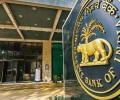
The Reserve Bank of India (RBI) will launch the Unified Lending Interface (ULI) nationwide in due course, aiming to transform India's lending sector, similar to how the Unified Payments Interface (UPI) revolutionised the payments ecosystem, Governor Shaktikanta Das said on Monday.
National Payments Corporation of India (NPCI) on Wednesday said there is no charge for the bank account to bank account-based UPI payments or normal UPI payments.

N Sundaresha Subramanian digs deeper into what Catalyst, an Indo-US project, brings to the payments ecosystem.
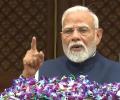
Prime Minister Narendra Modi on Monday said Parliament's Monsoon session is like a 'Vijay Utsav' as the Indian armed forces achieved their objectives under Operation Sindoor 100 per cent, and expressed confidence that the MPs will articulate this sentiment in one voice.

One97 Communications (OCL), the company that operates brand Paytm, received a nod from the National Payments Corporation of India (NPCI) to onboard new Unified Payments Interface (UPI) users. This comes nearly nine months after the Reserve Bank of India (RBI) placed an embargo on OCL to add new customers.

Financial technology (fintech) firms PhonePe and BharatPe announced on Sunday that they have settled long-standing legal disputes regarding the use of the trademark with the suffix 'Pe' in their brand names. The settlement concludes five-year-long legal disputes across multiple courts. Both companies have decided to withdraw all opposition against each other in the Trade Marks Registry.

'Banks may find small ticket size lending economically unviable due to the cost of branch operations.'

About 99,165 electric cars were sold in India in 2024, but electric car penetration -- share of electric car sales in total sales -- was just about 2.5 per cent.

In 2024, the National Payments Corporation of India (NPCI) approved 20 third-party Unified Payments Interface (UPI) applications, a record since UPI's launch in 2016. This surge reflects growing interest from financial technology (fintech) companies, driven by the integration of credit products like UPI-linked credit cards and pre-approved credit lines.

The scale of illegal gambling and betting in India is staggering, with 1.6 billion visits recorded between October and December 2024 across four analysed platforms -- Parimatch, Stake, 1xBet, and Battery Bet.
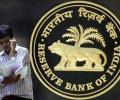
The Reserve Bank of India (RBI) has recognised the Fintech Association for Consumer Empowerment (FACE) as a self-regulatory organisation (SRO) in the fintech sector, the central bank announced on Wednesday. The banking regulator received three applications for fintech SRO. Of the remaining two applications, one has been returned by the RBI with a provision for resubmission after meeting specific requirements, while the third application is still under examination, said Governor Shaktikanta Das at the Global Fintech Fest in Mumbai.

President Droupadi Murmu's address to the nation on the eve of the 79th Independence Day.

Isn't there something significant in the UPI example for all of us to learn from and execute to enable world-scale success for our startups?, asks Ajit Balakrishnan.

In August, the Fed announced that it would develop a "new interbank 24x7x365 RTGS with integrated clearing functionality to support faster payments in the United States". The Fed Board asked for comments on FedNow by November. In reply to this, Google mentioned its experience of launching Google Pay -- Google's payments app which uses the UPI -- in India.

The CII Business Summit 2025's inaugural session witnessed a rousing standing ovation and a felicitation ceremony for the defence top brass sending a strong message about India's rising military industrial complex and hghlghting that security is a top-of-the-mind issue for India Inc.

'If you are not prudent, you may exceed your budget, and if it happens too often, you may end up in debt.'

Anmol Singh Jaggi and Puneet Singh Jaggi, once hailed as rising stars in India's clean energy sector, are now facing serious regulatory action.

Most public sector banks, flush with deposits now, offer 3-4% interest on savings deposits, while a few private sector banks go up to 6%.
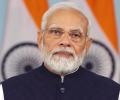
Prime Minister Narendra Modi on Friday expressed hope that G20 will draw inspiration from the vibrancy of the Indian economy and work towards bringing back stability, confidence and growth on the global landscape.

Reserve Bank of India governor Shaktikanta Das on Monday said payments through UPI (unified payment interface) have grown exponentially in the past 12 months with daily transactions crossing 36 crore, which is up 50 per cent from 24 crore in February 2022. In value terms, these transactions are worth Rs 6.27 lakh crore, registering a growth of 17 per cent from Rs 5.36 lakh crore in February 2022, the governor told reporters while launching the Digital Payments Awareness Week at the RBI headquarters in Mumbai this afternoon. He also said the overall monthly digital payment transactions crossed over Rs 1,000-crore-mark each month during the past three months.

India has no idiosyncratic innovation ecosystem, distinctively its own. Our VCs will not rush to fund brilliant ideas, says R Gopalakrishnan.

Call centres, once the engine room of India's BPO exports, are evolving too. Depending on the complexity, 30 to 50 per cent of voice and chat volumes are now handled by conversational AI.

Rediff.com, one of India's pioneering internet companies, on Tuesday announced the appointment of Mr Vishal Mehta as its new Chairman and Managing Director. This key leadership change follows Infibeam Avenues Ltd's acquisition of a majority stake in Rediff.com.

Reserve Bank of India on Friday said it has imposed a penalty of Rs 93 lakh on Axis Bank for various violations, including those related to KYC guidelines. The central bank has also slapped a fine of Rs 90 lakh on IDBI Bank. A monetary penalty of Rs 93 lakh has been imposed on Axis Bank for non-compliance of certain directions issued by RBI, the regulator said in a release.

The Competition Commission of India (CCI) on Monday ordered a detailed probe against internet giant Google for alleged unfair business practices with respect to Google Pay as well as Google Play's payment system. Google Pay is a popular digital payments platform while Google Play is the app store on its Android ecosystem.

More than three weeks have passed since the Reserve Bank of India's (RBI's) new guidelines on e-mandates for recurring payments came into effect but consumers are still taking to social media platforms to complain about the disruptions they are facing. This comes as most stakeholders in the ecosystem have not put in place systems in accordance with the new rules, resulting in many transactions not going through. Industry sources said most banks are still not ready, especially the smaller ones.

The FM said there has been a manifold increase in digital payments in the recent past.

User protection and a proposal for a licensing framework for companies seeking to operate in the cryptocurrency area will be part of an upcoming consultation paper on the sector, said a senior industry executive. Even as specific regulations around crypto are yet to take shape, companies are setting up baseline user protection processes, including a redressal mechanism, fraud detection, regular filing of suspicious transaction reports (STRs), among others.
